The Secret to Better Leftovers: Get More from Every Meal with a Sharp Microwave
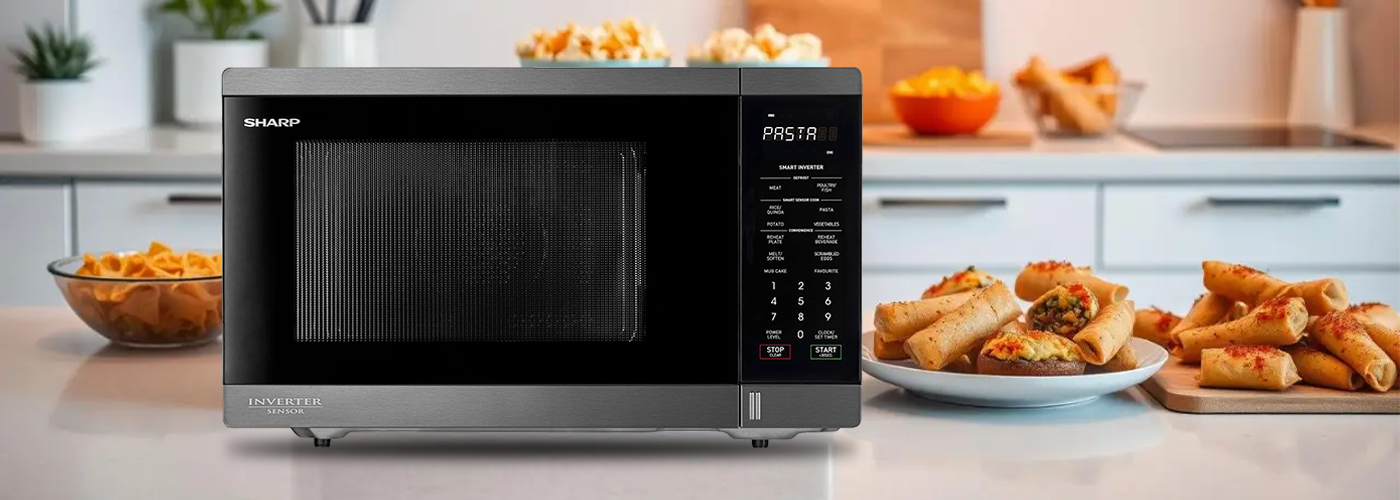
How Do You Reheat Leftovers in a Microwave?
The best way to reheat leftovers in a microwave is to cover the food, use a suitable power level, stir or rotate it during heating, and allow it to stand before eating. Add a little water or stock to foods that tend to dry out, such as rice and pasta.
For food safety, refrigerate leftovers promptly, reheat them until steaming hot throughout, and avoid reheating the same food more than once. A Sharp microwave makes it easy to enjoy convenient, home-cooked meals while reducing food waste and saving time in the kitchen.
Why Make the Most of Your Leftovers?
Leftovers are an easy way to make the most of your weekly food shop. Whether you're preparing lunches in advance, saving extra portions from dinner or looking for a quick meal after work, reheating food in the microwave can make everyday cooking simpler.
Making the most of leftovers can help you:
Reduce food waste: Give extra portions of home-cooked meals another chance to be enjoyed.
Save money: Make more of the groceries you've already purchased.
Save time: Enjoy a ready-made meal without starting from scratch.
Make meal preparation easier: Cook in batches and keep suitable portions ready for busy days.
Enjoy more variety: Turn leftover roast vegetables, chicken or rice into wraps, salads and quick meals.
With the right reheating technique, yesterday's dinner can become today's satisfying lunch without compromising on flavour or texture.
Five Tips for Better Microwave Leftovers
1. Cover Your Food to Retain Moisture
One of the simplest ways to improve microwave reheating is to cover your food with a microwave-safe lid or suitable cover.
Covering food helps retain moisture, reduces splatters and helps prevent the surface from drying out while the meal heats. Leave an appropriate vent for steam to escape, and always follow the instructions for your cover or container.
This works particularly well for rice, pasta, vegetables, casseroles and other meals that can lose moisture during reheating.
2. Stir or Rotate Your Meal Halfway Through
Microwaves can heat food unevenly, particularly when you're reheating large portions or dense meals.
For soups, curries, pasta sauces and casseroles, stir the food partway through heating to distribute the heat more evenly. If the meal cannot be stirred, rotate the dish where possible.
Always check the centre and several areas of the food before serving. If any part is still cold, continue reheating and check again.
3. Choose the Right Power Level
Using maximum power isn't always the best approach to reheating leftovers.
A lower microwave power setting can help warm delicate foods more gently and reduce the risk of overcooking the edges before the centre is hot. This can be useful for thick casseroles, pasta dishes and larger portions.
Start with a shorter heating time, check the food, and continue in small intervals as needed. The ideal setting and duration will depend on the type of food, portion size, starting temperature and your microwave model.
4. Add a Little Moisture to Rice, Pasta and Vegetables
Leftovers can lose moisture while stored in the refrigerator, making them dry when reheated.
To help restore their texture, try adding:
A tablespoon or two of water to a portion of rice.
A splash of water, milk or sauce to pasta, depending on the dish.
A little stock to soups, stews and casseroles that have thickened.
A small amount of water to suitable cooked vegetables.
Cover the food, heat it thoroughly and stir where appropriate. Adjust the amount of liquid to suit the portion size so your meal stays moist without becoming watery.
5. Let Your Food Stand Before Eating
Once your microwave stops, give your food a short standing time before serving.
Standing allows heat to continue distributing throughout the meal, helping reduce cold spots. This is especially useful when reheating thicker dishes such as lasagne, casseroles and large portions of curry.
Stir the food where possible and check that it is steaming hot throughout before eating. If it is not, return it to the microwave for additional heating.
How to Reheat Different Types of Leftovers
Different foods benefit from slightly different reheating methods. Use these practical tips as a starting point, adjusting the time to suit your portion size and Sharp microwave model.
| Leftover food | How to reheat it |
| Rice | Add a little water, cover and heat until steaming hot throughout. Stir to distribute the heat. |
| Pasta | Add a splash of water or sauce, cover and stir halfway through heating. |
| Curry and stew | Cover, stir thoroughly during reheating and check that the centre is steaming hot. |
| Soup | Use a microwave-safe container with room for expansion. Cover loosely, stir during heating and take care when handling the hot liquid. |
| Roast vegetables | Cover to retain moisture. For a softer result, add a small amount of water. |
| Cooked chicken | Slice larger pieces into smaller portions where practical, cover and heat until steaming hot throughout. |
| Lasagne and casseroles | Cover to help retain moisture, heat in stages and allow time to stand before checking the centre. |
Remember: These are general reheating techniques, not fixed cooking times. Always check that food is thoroughly reheated before serving.
Is It Safe to Reheat Leftovers in a Microwave?
Yes. A microwave can be used to reheat leftovers safely when food has been stored correctly and is heated thoroughly.
Follow these important food safety practices:
Refrigerate leftovers promptly. Don't leave cooked food sitting at room temperature for extended periods. Follow New Zealand food safety guidance for cooling and storage.
Use suitable containers. Choose microwave-safe dishes and covers, and follow the manufacturer's instructions.
Heat food thoroughly. Leftovers should be steaming hot throughout, not just warm around the edges.
Stir and check for cold spots. Microwaves may heat unevenly, so check different parts of the meal.
Reheat only what you need. Portioning leftovers before storage makes it easier to heat a single serving.
Avoid repeated reheating. Reheat only the amount you intend to eat and avoid reheating the same leftovers more than once.
When in doubt about how long food has been stored or whether it is safe to eat, it's best to discard it.
Which Sharp Microwave Is Best for Reheating Leftovers?
Not all microwaves work in the same way. When choosing a Sharp microwave, consider its cooking power, internal capacity, heating technology and whether you need additional functions such as grilling, baking or air frying.
For everyday leftovers, a conventional microwave may be all you need. If you want more consistent heating, a flatbed design or the flexibility to crisp and brown food, there are other options to consider.
Sharp R333FW: 34L, 1200W Smart Inverter Microwave
Best for: Everyday reheating, family portions and more controlled cooking.
The Sharp R333FW combines a spacious 34-litre interior with Smart Inverter technology and 1200W-class microwave performance. Inverter technology controls the delivery of cooking power more precisely than traditional power cycling, helping food heat more consistently when reheating or defrosting.
With 23 automatic menus, two-stage cooking and a 315mm turntable, it offers useful everyday functions for busy households.
For leftovers, the R333FW is a good option for reheating plates of food, warming soups and curries, and defrosting ingredients for your next meal. Its turntable rotates food during cooking, while the inverter system helps provide more controlled heating.
Key features:
34L capacity
Smart Inverter technology
1200W-class model, with the product specifications listing 1100W microwave output
23 automatic menus
315mm turntable
Two-stage cooking
Choose the R333FW if you want a spacious everyday microwave with inverter technology and helpful automatic cooking options.
Explore the Sharp R333FW Smart Inverter Microwave.
Sharp R395EBS: 34L, 1200W Smart Inverter Microwave with Sensor Cooking
Best for: Households that want powerful reheating and additional automatic cooking assistance.
The Sharp R395EBS also offers a 34-litre capacity and 1200W microwave output, but adds smart sensor cooking to its inverter technology. The sensor feature can detect moisture released by food and use that information to help determine suitable cooking time and power for supported programmes.
This can make everyday reheating more convenient, particularly when you regularly prepare different meals and would prefer to use automatic settings rather than estimate every cooking time yourself.
For leftovers, use the reheat functions to help simplify warming meals, while stirring food where necessary and checking that it is steaming hot throughout. Its turntable and inverter technology support more consistent heating, while the sensor programmes provide additional convenience.
Key features:
34L capacity
1200W microwave output
Smart Inverter technology
Smart sensor cooking
23 automatic menus
315mm turntable
LED text display and touch controls
Choose the R395EBS if you want a roomy inverter microwave with sensor-assisted cooking for added convenience.
Explore the Sharp R395EBS Smart Inverter Microwave.
Sharp SM327FHBS: 32L, 1200W Smart Inverter Flatbed Microwave
Best for: Larger or awkwardly shaped dishes, easier cleaning and flexible reheating.
The Sharp SM327FHBS differs from the R333FW and R395EBS because it uses a flatbed cooking design instead of a traditional rotating turntable.
Its flat ceramic base provides a wide, usable cooking area, making it easier to position some rectangular, square or larger microwave-safe containers. With no turntable to remove, the interior is also simpler to wipe clean.
The SM327 series combines 1200W microwave output with Smart Inverter technology and sensor-assisted cooking. This makes it a useful option for households that regularly reheat meals in different types of containers and want additional convenience when cleaning the microwave.
Although the flatbed design provides more flexibility for arranging dishes, food still needs to be positioned and heated correctly. Stirring and checking for cold spots remain important.
Key features:
32L capacity
1200W microwave output
Smart Inverter technology
Flatbed ceramic interior with no turntable
Smart sensor cooking
23 automatic menus
LED text guidance
Choose the SM327FHBS if you value a turntable-free interior, easier cleaning and the flexibility to accommodate different dish shapes.
Explore the Sharp SM327 flatbed microwave range.
Want More Than Reheating? Consider a Convection Microwave
If you want to do more than heat and defrost food, the Sharp R321CAFBS offers a different level of versatility.
This 32-litre, 1100W microwave combines microwave cooking with convection baking, grilling and AirFry functionality. Convection cooking circulates hot air to bake and roast food, while the grill and AirFry functions provide additional ways to brown or crisp suitable dishes.
That makes it particularly useful when you want to prepare a meal from scratch or improve the texture of foods that are better crisped than simply reheated. For example, you can use the microwave function to warm food quickly and select an appropriate grill, convection or AirFry function when the dish needs a crispier finish.
Key features:
32L capacity
1100W microwave output
2500W convection power
Microwave, convection, grill and AirFry functions
34 automatic menus
315mm turntable
Choose the R321CAFBS if you want an all-in-one appliance that can reheat leftovers and also bake, roast, grill and air fry.
Explore the Sharp R321CAFBS Convection AirFry Microwave.
What Do Microwave Wattage, Inverter Technology and Flatbed Design Mean?
Understanding these differences can help you choose the right microwave for your cooking habits.
Microwave wattage: How much cooking power does it have?
Microwave wattage refers to the microwave's cooking output. In general, higher output power can heat food more quickly, although the time required still depends on portion size, food type, starting temperature and the appliance's design.
For example, a 1200W microwave can generally reheat a meal faster than a 750W microwave under comparable conditions. However, more power does not automatically mean better results for every dish.
Inverter technology: How does it help with reheating?
Inverter technology provides more continuous, controlled power delivery at lower settings, rather than relying on the traditional approach of cycling full power on and off. This can help improve control when reheating, defrosting and cooking food that benefits from gentler heating.
Flatbed design: Why choose a microwave without a turntable?
A flatbed microwave has a flat cooking surface rather than a rotating glass plate. This gives you more flexibility when arranging suitable containers and makes the cooking area easier to clean. A flatbed design does not automatically mean the microwave has more power.
Convection cooking: How is it different from microwave cooking?
A convection microwave uses a heating element and fan to circulate hot air, allowing it to bake and roast in ways a standard microwave cannot. Models with grill and AirFry functions offer additional ways to brown and crisp food.
For simple reheating, a standard microwave may be sufficient. For more cooking flexibility, a convection model can be a better fit.
Make Every Meal Go Further with Sharp
Better leftovers start with a few simple habits. Cover your food, choose an appropriate power level, stir during reheating, add moisture when needed and allow time for the heat to distribute before serving.
These small steps can help you enjoy better-tasting meals while making the most of the food you already have.
Whether you're reheating last night's dinner, preparing lunches for the week or warming up a quick meal between meetings, a Sharp microwave helps make everyday cooking more convenient.
Ready to make more of every meal?
Explore the Sharp New Zealand microwave range and find an option to suit your kitchen, household and everyday cooking needs.
Frequently Asked Questions
What is the best way to reheat leftovers in a microwave?
Cover the food with a microwave-safe cover, heat it using a suitable power setting, and stir or rotate it during reheating. Allow it to stand briefly, then check that it is steaming hot throughout before eating.
How do you stop food from drying out in the microwave?
Covering food helps retain moisture. You can also add a small amount of water, stock or sauce to suitable dishes such as rice, pasta and casseroles. Avoid overheating, as this can make food dry or rubbery.
Why are my leftovers hot on the outside but cold in the middle?
Microwave heating can be uneven, particularly with thick foods or large portions. Stir the meal during reheating, rotate the container if needed, and continue heating until the centre is steaming hot. Allow the food to stand before checking again.
Can you reheat rice in a microwave?
Yes. Rice can be reheated in a microwave if it has been cooled and stored safely. Add a little water, cover it, stir during heating and ensure it is steaming hot throughout. Cooked rice needs particular care: cool it quickly, refrigerate promptly and avoid leaving it at room temperature.
How many times can you reheat leftovers?
As a safe household practice, reheat leftovers only once. Portion food before reheating so you only heat the amount you intend to eat. Always store leftovers correctly and heat them thoroughly.
Can you reheat chicken in a Sharp microwave?
Yes. Previously cooked chicken can be reheated in a Sharp microwave when it has been stored safely. Cut large pieces into smaller portions where practical, cover them, and heat until steaming hot throughout. Check the thickest part before serving.
What power level should I use to reheat leftovers?
The appropriate power level depends on the food, its quantity and your microwave model. Lower power can help heat some dense or delicate dishes more gently, while other foods may reheat effectively at a higher setting. Start with a short interval, stir where possible and check the result before continuing.
Which Sharp microwave is best for reheating family meals?
The best choice depends on your household size, portion sizes, available kitchen space and cooking requirements. The Sharp R395EBS is worth considering if you need more room for larger portions, while the R333FW suits everyday reheating needs. The SM327FHBS adds grill functionality for households wanting greater cooking versatility.
Does reheating leftovers in a microwave help reduce food waste?
Yes. Reheating safely stored leftovers makes it easier to use food that has already been prepared instead of throwing it away. Planning portions, labelling stored meals and using leftovers for lunches can also help reduce household food waste.

Quin Polderman is a Marketing Coordinator at Sharp New Zealand, supporting the delivery of integrated workplace technology solutions across print, visual solutions, software, and managed services. He focuses on coordinating marketing activity that helps communicate Sharp’s value in delivering secure, efficient, and connected business environments.