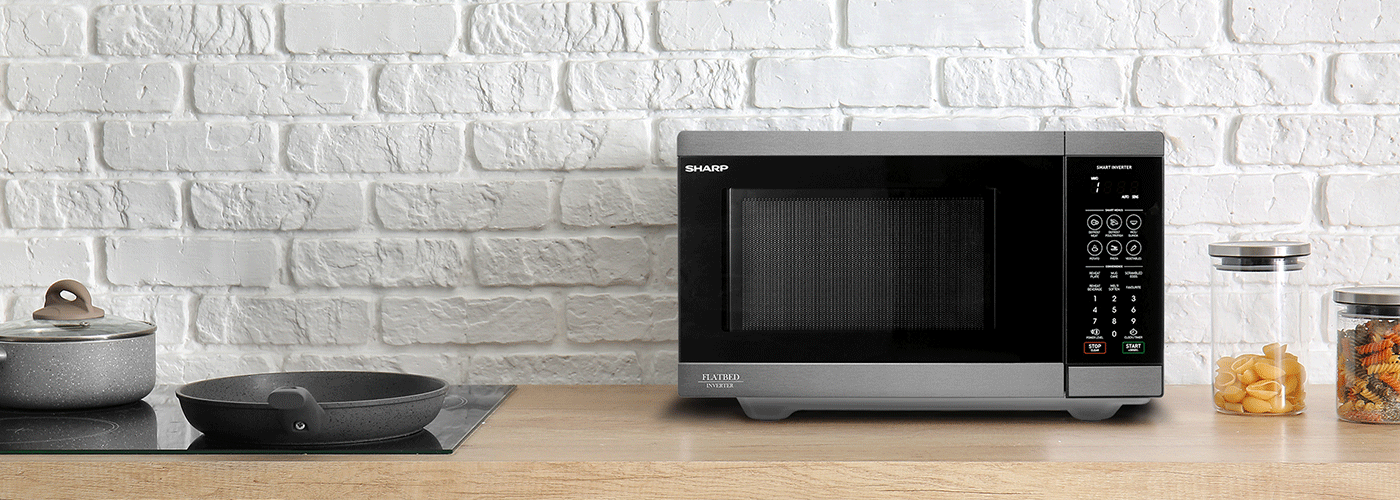
Microwaves have become ubiquitous in modern kitchens, but not all microwaves are created equal.
When choosing your next unit, you’ll often hear terms like regular microwave, convection microwave, inverter technology, and hybrid mode. Let’s break it down — and help you pick the right one for your lifestyle.
1.
What we mean by “regular microwave”
A “regular” microwave (sometimes called a standard or conventional microwave) uses microwave radiation (via a magnetron) to heat water molecules in food. In practice:
-
It’s great for reheating, defrosting, and simple cooking tasks.
-
Cooking is fast, but heating can be uneven, resulting in “cold spots” or overheated edges.
-
Most regular microwaves operate at discrete power levels (often by cycling the magnetron on and off).
-
You can’t brown or crisp food — you won’t get roast textures or baked finishes.
Regular microwaves are ideal for quick, no-fuss tasks: warming leftovers, defrosting meats, steaming vegetables, or heating liquids.
2. What a convection microwave adds to the mix
A convection microwave is a hybrid device. It combines standard microwave heating with a heating element and fan that circulate hot air — effectively letting it act partly like a conventional oven.
Here’s what that enables:
-
Baking, roasting, grilling & crisping: The fan-forced heat gives you browning, crisp edges, and textures you couldn’t achieve with microwave heat alone.
-
More even cooking: The air circulation helps reduce hot/cold spots, especially in conjunction with microwave mode.
-
Multiple cooking modes: Many Sharp convection microwaves support combinations — microwave + convection, grill, or even air fry modes.
-
Flexibility: You can switch between fast microwaving and slower, oven-style cooking depending on what your food needs.
That said, convection microwaves are usually more expensive than regular ones, and their fan/element parts add complexity and maintenance considerations.
3. Sharp’s line: how we do convection + regular
At Sharp, we offer models that span from efficient, feature-rich regular microwaves to fully fledged convection hybrids. Some highlights:
-
The Sharp R395EST is a “smart inverter microwave” with 1100 W microwave power, inverter technology (for more even heating), smart sensor modes, and about 28 auto menus.
-
The R321CAFBS is a 32 L 5-in-1 convection + air fry model — microwave, bake, roast, grill, air fry — giving you a lot of versatility in one unit.
-
Sharp also supports hybrid modes in over-the-range convection microwaves, allowing combinations of microwave + convection heating.
By offering both pure microwave models and hybrid convection units, Sharp gives you the choice to match your cooking style, dietary habits, and kitchen setup.
4. Pros & cons: Which is right for you?
| Feature | Regular Microwave | Convection Microwave |
|---|
| Speed | Very fast | Still fast for many tasks, though convection modes take longer |
| Crisping / Browning | Not possible | Yes — thanks to hot-air circulation |
| Versatility | Limited to reheating, defrosting, simple cooking | Bake, roast, grill, crisp, plus microwave mode |
| Evenness | Prone to cold/hot spots | Better with fan + microwave combination |
| Complexity | Simpler design, fewer points of failure | More parts (fan, heating element), more settings to manage |
| Cost | Generally lower cost | Higher cost, reflecting extra functionality |
If your usage is mostly reheating, defrosting, and quick heating, a well-designed regular microwave might be perfect. But if you want to reduce clutter (i.e. fewer separate oven/grill appliances) and want more cooking flexibility in one unit, a convection microwave may be a better long-term investment.
5. Tips for getting the best result
-
Use microwave + convection hybrid modes when available — this gives you speed and better texture.
-
Preheat in convection mode before switching to hybrid cooking for baked goods or roasting.
-
Arrange food to allow airflow — avoid blocking fan vents.
-
Use suitable cookware — metal pans work in convection mode (not in “pure microwave” mode).
-
Clean the fan and heating elements as part of regular maintenance, to retain performance.
6. Conclusion & recommendation
In short: a regular microwave is excellent for fast, everyday tasks where speed and simplicity matter. A convection microwave adds oven-like behavior — browning, crisping, roasting — with the convenience of microwave energy. Sharp’s range offers both types as well as hybrid modes, so you can pick exactly what suits your kitchen and cooking habits.
Want help choosing among Sharp models or comparing feature-by-feature? Let us know — we’d be happy to guide you to the perfect fit for your home.