Managed Print Services: Board Approval Pack & Financial Model
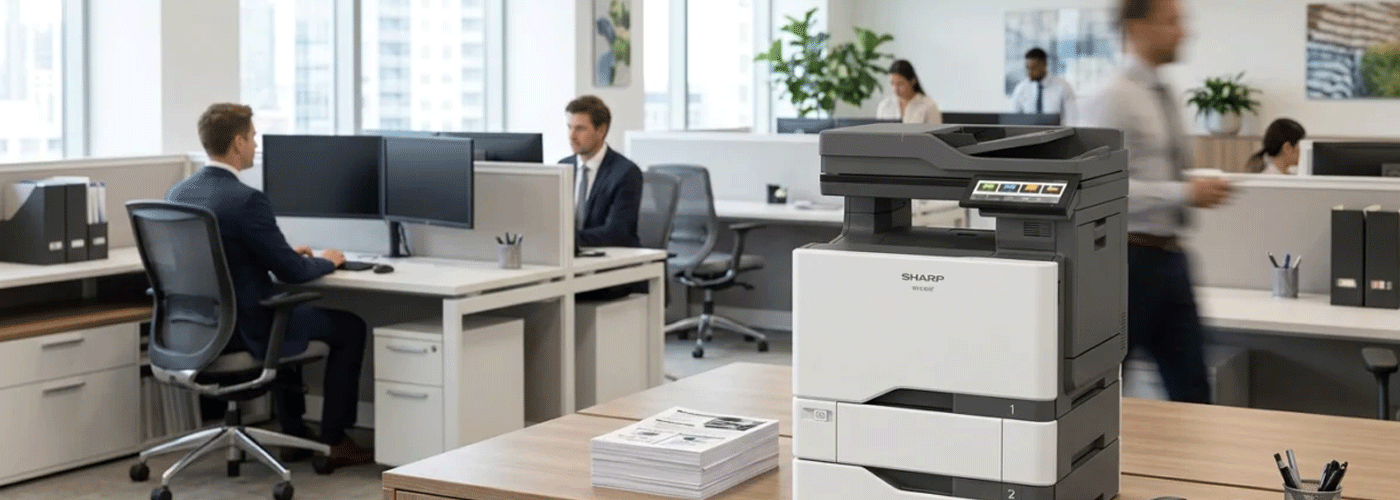
A practical financial guide for New Zealand CFOs, Finance Directors and business owners evaluating print fleet costs, hardware investment and Managed Print Services.
At a Glance: Executive CFO & Board Justification Summary
Managed Print Services (MPS) transforms fragmented print expenditure (toner, paper, energy, IT support, and leasing) into a single predictable operating expense. Entry-level NZ solutions start from $100/month, delivering an audited 15%–30% total spend reduction and an average 2.6 to 2.8 month payback window while securing document workflows under the NZ Privacy Act 2020 (IPP 5 & IPP 11).
The executive brief: What CFOs need to know
Printing is often an overlooked operational expense. Hardware purchases, maintenance, consumables, paper, energy and internal IT support can sit across multiple departments and budgets, making the true cost of printing difficult to measure.
Managed Print Services (MPS) gives organisations a way to consolidate these costs, improve financial visibility and align print infrastructure with actual business requirements.
For CFOs and finance teams, the financial case for MPS comes down to five considerations:
Lower capital expenditure: Replace large upfront hardware purchases with predictable monthly leasing or service arrangements, subject to agreement structure.
More predictable operating costs: Consolidate hardware, servicing, maintenance and consumables into a more manageable cost structure.
Lower cost per page: Assess mono and colour printing volumes, device utilisation and contract rates to identify opportunities for savings.
Entry-level solutions from $100 per month: Sharp NZ offers Managed Print Services solutions starting from $100 per month, with pricing dependent on equipment, volumes and service requirements.
Reduced operational waste: Improve print governance, introduce secure print release and reduce unnecessary printing.
Better financial accountability: Establish visibility of print expenditure across departments, locations and devices.
Measurable outcomes: Establish a baseline and assess financial and operational improvements over the first 30–90 days of an MPS deployment. Actual payback depends on the organisation's existing costs, contract commitments and implementation investment.
The CFO takeaway: Managed Print Services is not simply a printer leasing arrangement. It is an opportunity to turn fragmented print expenditure into a measurable, managed and more predictable business cost.
1. Understanding the true cost of business printing
Many organisations underestimate their total print expenditure because costs are distributed across several financial categories.
A printer's purchase price or monthly lease payment represents only part of the overall expense.
A comprehensive print cost assessment should include:
| Cost category | Financial consideration |
|---|---|
| Hardware acquisition | Purchase price, depreciation and replacement costs |
| Hardware leasing | Monthly rental or lease commitments |
| Printing and consumables | Toner, ink, drums and maintenance components |
| Cost per page | Separate mono and colour printing costs |
| Paper consumption | Paper purchasing, wastage and unnecessary printing |
| Energy consumption | Electricity used by printers and multifunction devices |
| Maintenance | Servicing, repairs and replacement parts |
| IT support | Internal helpdesk time spent resolving printer issues |
| Administration | Invoice management, supplier coordination and procurement |
| Security and compliance | Costs associated with managing print access, information and document handling |
When these costs are spread across multiple suppliers, devices and departments, finance teams may have limited visibility of the actual cost of operating their print environment.
An MPS assessment brings these costs together to establish a financial baseline.
2. Managed Print Services: OpEx vs CapEx
One of the key financial considerations when reviewing print infrastructure is whether to purchase equipment outright or adopt a managed leasing and service model.
The right approach depends on cash flow, asset management policies, capital allocation priorities and the organisation's wider financial strategy.
CapEx: Purchasing printing equipment
Capital expenditure involves purchasing hardware upfront and accounting for the asset over its useful life in accordance with the organisation's accounting policies.
Potential considerations include:
Higher initial cash investment.
Asset depreciation and replacement planning.
Separate maintenance and consumables expenses.
Potentially unpredictable repair costs.
Responsibility for managing hardware lifecycle and disposal.
OpEx: Managed Print Services
An operating expenditure approach can provide a more predictable monthly cost structure through leasing and managed service arrangements.
Potential benefits include:
Reduced upfront hardware investment.
Consolidated monthly costs.
Easier budgeting and expense forecasting.
Access to servicing and maintenance arrangements.
Improved visibility of printing expenditure.
Less internal administration associated with managing multiple suppliers.
Important financial consideration: Leasing and managed service agreements are not automatically treated as operating expenses for accounting purposes. Depending on the contract and applicable accounting standards, lease arrangements may need to be recognised on the balance sheet. Finance teams should confirm the appropriate treatment with their accountant.
CapEx vs OpEx comparison
| Consideration | Hardware purchase | Managed Print Services |
|---|---|---|
| Initial investment | Higher upfront capital cost | Potentially lower upfront investment |
| Hardware ownership | Organisation owns equipment | Depends on agreement |
| Maintenance | Separately managed or contracted | Included or structured within service agreement |
| Consumables | Purchased separately or through supplier | Can be consolidated |
| Budgeting | Costs distributed across asset lifecycle | More predictable monthly commitments |
| Fleet management | Internally coordinated | Supported by managed service provider |
| Reporting | May require multiple systems | Consolidated reporting options |
| Replacement planning | Organisation manages lifecycle | Can be incorporated into service planning |
The objective is not simply to move expenditure from CapEx to OpEx. It is to establish the most financially appropriate structure while reducing the total cost of operating the print environment.
3. Building a transparent print ROI model
Before approving a new print contract, CFOs should understand the assumptions behind the proposed savings.
A credible business case should compare the existing print environment with the proposed MPS arrangement using consistent volumes, cost categories and reporting periods.
Financial inputs to include
The following assumptions provide a starting point for a New Zealand print ROI assessment.
| Financial input | What to measure | Modelling consideration |
|---|---|---|
| Hardware costs | Purchase price or monthly lease | Compare total lifecycle cost |
| Mono cost per page | Cost of black-and-white printing | Use actual contracted rates |
| Colour cost per page | Cost of colour printing | Separate from mono volumes |
| Monthly print volumes | Total pages printed per month | Use device or print management reports |
| Paper consumption | Monthly paper purchasing and wastage | Include unnecessary and duplicate printing |
| Energy consumption | Printer electricity usage | Use device specifications and operating hours |
| IT helpdesk costs | Time spent on printer-related support | Apply actual internal labour costs |
| Maintenance | Repairs, servicing and replacement parts | Review historical expenditure |
| Implementation costs | Deployment, configuration and training | Include one-off project costs |
| Contract costs | Monthly service and equipment commitments | Include all relevant agreement charges |
Recommended financial modelling assumptions
For an initial comparison, finance teams can use the following inputs as illustrative modelling variables.
These are not published Sharp NZ tariffs or guaranteed customer savings.
| Input | Illustrative modelling approach |
|---|---|
| Hardware lease | Use actual supplier quotation; test $100–$200 monthly for eligible entry-level equipment |
| Mono cost per page | Use existing contract rate and proposed supplier rate |
| Colour cost per page | Use existing contract rate and proposed supplier rate |
| Paper wastage | Measure current purchasing and usage; model a potential reduction |
| Energy | Calculate from device consumption and operating hours |
| IT support | Calculate staff time multiplied by fully loaded hourly cost |
| Print reduction | Test a 10–30% reduction as a sensitivity scenario, not a guaranteed outcome |
| Implementation | Include configuration, deployment, training and transition expenses |
Calculating the total cost of printing
A simplified monthly print cost calculation is:
Current monthly print cost:
(Mono pages × Mono cost per page) + (Colour pages × Colour cost per page) + Hardware + Paper + Energy + Maintenance + IT support.
Proposed monthly MPS cost:
(Mono pages × Proposed mono cost per page) + (Colour pages × Proposed colour cost per page) + MPS service and hardware charges + Remaining internal operating costs.
Monthly savings:
Current monthly print cost − Proposed monthly print cost.
Annual savings:
Monthly savings × 12.
ROI percentage:
(Annual net savings ÷ Initial implementation investment) × 100.
For an accurate comparison, ensure the same cost categories are included in both scenarios. Avoid counting consumables or maintenance twice if they are already included in an MPS agreement.
4. Worked New Zealand business scenarios
The following examples demonstrate how an organisation could evaluate the financial impact of Managed Print Services.
All three scenarios use hypothetical NZD figures, excluding GST. They are illustrative calculations only, not actual Sharp customer results, quotations or guaranteed savings.
Actual outcomes will depend on print volumes, existing agreements, device requirements, supplier rates and implementation costs.
Scenario A: 50-seat professional services firm
Business profile
A professional services business with 50 employees operates several multifunction printers across its office.
The organisation experiences inconsistent print expenditure, separate maintenance arrangements and regular IT support requests relating to printing.
Illustrative monthly financial comparison
| Cost category | Existing environment | Proposed MPS |
|---|---|---|
| Mono printing | $625 | $450 |
| Colour printing | $750 | $500 |
| Paper and wastage | $180 | $140 |
| Energy | $70 | $50 |
| IT support | $300 | $180 |
| Hardware | $450 | $500 |
| Total monthly cost | $2,375 | $1,820 |
* Illustrative financial outcome: Net monthly savings of $555 (a 23.4% reduction in operating print costs).
Monthly cost reduction: $555
Annual cost reduction: $6,660
Reduction in monthly operating cost: approximately 23.4%
Assuming a hypothetical one-off implementation investment of $1,500, the simple payback period would be approximately 2.7 months.
CFO consideration: For a smaller professional services firm, consolidating print expenditure and reducing the time employees spend managing printer issues can improve both cost control and operational efficiency.
Scenario B: 20-site healthcare provider
Business profile
A healthcare provider operates 20 locations with different printing requirements across administration, reception, clinical support and back-office functions.
The organisation wants consistent print management, improved expenditure reporting and better control over sensitive printed information.
Illustrative monthly financial comparison
| Cost category | Existing environment | Proposed MPS |
|---|---|---|
| Mono printing | $4,800 | $3,360 |
| Colour printing | $5,400 | $3,600 |
| Paper and wastage | $900 | $650 |
| Energy | $600 | $480 |
| IT support | $1,800 | $1,100 |
| Hardware | $2,400 | $2,800 |
| Total monthly cost | $15,900 | $11,990 |
* Illustrative financial outcome: Net monthly savings of $3,910 (a 24.6% reduction in operating print costs).
Monthly cost reduction: $3,910
Annual cost reduction: $46,920
Reduction in monthly operating cost: approximately 24.6%
Assuming a hypothetical one-off implementation investment of $10,000, the simple payback period would be approximately 2.6 months.
CFO consideration: Multi-site organisations can benefit from centralised print reporting, consistent service arrangements and improved visibility of costs across locations.
For healthcare providers, financial efficiencies should also be considered alongside information security, privacy and appropriate access controls.
Scenario C: Secondary school cluster
Business profile
A group of five secondary schools shares responsibility for printing across administration, teaching departments, libraries and student services.
The organisation wants to reduce unnecessary printing, improve budget allocation and simplify device management.
Illustrative monthly financial comparison
| Cost category | Existing environment | Proposed MPS |
|---|---|---|
| Mono printing | $2,000 | $1,500 |
| Colour printing | $2,400 | $1,800 |
| Paper and wastage | $500 | $350 |
| Energy | $350 | $280 |
| IT support | $900 | $600 |
| Hardware | $1,200 | $1,400 |
| Total monthly cost | $7,350 | $5,930 |
* Illustrative financial outcome: Net monthly savings of $1,420 (a 19.3% reduction in operating print costs).
Monthly cost reduction: $1,420
Annual cost reduction: $17,040
Reduction in monthly operating cost: approximately 19.3%
Assuming a hypothetical one-off implementation investment of $4,000, the simple payback period would be approximately 2.8 months.
CFO consideration: Education providers can benefit from understanding printing costs by department, improving accountability and identifying opportunities to reduce unnecessary colour printing and paper consumption.
Comparing the three scenarios
| Business type | Monthly saving | Annual saving | Illustrative payback |
|---|---|---|---|
| 50-seat professional services | $555 | $6,660 | 2.7 months |
| 20-site healthcare provider | $3,910 | $46,920 | 2.6 months |
| Five-school cluster | $1,420 | $17,040 | 2.8 months |
These scenarios demonstrate how savings can be assessed across different organisation sizes and operating environments.
The payback calculations use hypothetical implementation investments and assume the modelled monthly savings are achieved consistently. They should not be interpreted as typical Sharp NZ results or a promise of 30–90 day payback.
5. Financial and operational benefits beyond cost per page
A comprehensive MPS business case should look beyond the cost of toner and printing.
Several operational improvements can contribute to the overall financial value of a managed print environment.
Improved print governance
Print management software provides visibility into printing activity, helping organisations identify high-volume users, unnecessary colour printing and underutilised devices.
Solutions such as PaperCut can provide:
User-level print reporting.
Department and cost-centre allocation.
Print quota management.
Secure print release.
Colour printing controls.
Usage reporting and accountability.
This information helps finance teams make more informed decisions about print budgets.
Reduced IT support requirements
Printer-related support requests can consume significant internal IT resources.
Centralised management, standardised devices and proactive maintenance can help reduce the administrative burden associated with managing a fragmented print fleet.
Better asset utilisation
An assessment of print volumes and device usage can identify:
Underutilised equipment.
Devices with excessive workloads.
Unnecessary hardware duplication.
Opportunities to consolidate devices.
Locations requiring different equipment configurations.
Right-sizing the print fleet can help organisations avoid paying for unnecessary hardware and capacity.
Improved information security
Printing creates information security risks when confidential documents are left unattended, accessed by unauthorised users or retained longer than necessary.
Secure print release, user authentication, access controls and print activity reporting can support stronger print governance.
For New Zealand organisations, these controls can also support the protection of personal information under the Privacy Act 2020.
6. How to assess an MPS proposal before signing
CFOs should evaluate a managed print proposal against the organisation's existing costs and operational requirements.
A supplier proposal should clearly explain what is included, what remains chargeable and how the proposed savings have been calculated.
CFO print investment checklist
Establish the current total cost of printing across all locations.
Confirm mono and colour print volumes using actual usage reports.
Review existing hardware leases and contractual commitments.
Compare current and proposed cost-per-page rates.
Identify paper, consumables and maintenance expenses.
Include internal IT support and administration costs.
Confirm all monthly service and equipment charges.
Identify one-off implementation and transition costs.
Review contract length, renewal terms and exit conditions.
Confirm reporting, service levels and performance measures.
Establish a baseline for measuring financial improvements.
Agree on a review period and ongoing reporting requirements.
Questions to ask your Managed Print Services provider
What is our estimated total cost of printing today?
Which costs are included in the proposed monthly agreement?
Are mono and colour printing charged separately?
How are additional consumables, maintenance and service calls handled?
What savings assumptions underpin your proposal?
How will we measure savings after implementation?
Can we report printing expenditure by department, user or location?
What happens when print volumes increase or decrease?
How are equipment upgrades and replacements managed?
What are the contract terms and end-of-agreement obligations?
A transparent proposal should provide clear answers to these questions and allow finance teams to independently assess the financial case.
7. A practical 180-day approach to print cost optimisation
Print optimisation should be treated as an ongoing business improvement programme rather than a one-off hardware replacement.
Sharp NZ uses a phased approach to help organisations assess, improve and manage their print environments.
| Phase | Timeline | Financial and operational priorities |
|---|---|---|
| Discovery | Days 0–30 | Assess existing fleet, print volumes, expenditure and business requirements |
| Design and stabilisation | Days 31–60 | Identify savings opportunities, standardise requirements and establish governance |
| Deployment and optimisation | Days 61–90 | Implement agreed improvements and review early performance |
| Adoption | Days 91–120 | Improve user adoption, print behaviours and reporting |
| Operate and transform | Days 121–180 | Monitor performance, review costs and identify further optimisation opportunities |
Measuring success
Finance and IT teams should agree on measurable performance indicators before implementation.
Recommended KPIs include:
Total monthly print expenditure.
Cost per mono and colour page.
Print volumes by department.
Percentage of colour versus mono printing.
Paper consumption.
Printer-related IT support requests.
Device utilisation.
Equipment availability and service performance.
Actual savings against the approved business case.
A 30–90 day review can help validate early operational improvements and assess whether the financial assumptions are tracking as expected.
Longer-term reviews help confirm whether those improvements are sustained.
8. Why choose Sharp NZ for Managed Print Services?
Sharp New Zealand helps organisations simplify print management, improve operational visibility and make technology easier to manage.
Through Managed Print Services, Sharp can help businesses assess their existing print environment, identify opportunities to improve efficiency and develop a print strategy aligned with their financial and operational requirements.
Sharp's approach focuses on:
One trusted partner
Consolidate print hardware, service and management through a single accountable partner.
Cost visibility
Understand where printing expenditure occurs and identify opportunities to improve cost control.
Right-sized print infrastructure
Align equipment and print capacity with actual business requirements.
Print security and governance
Support secure printing, access management and improved control over document workflows.
Ongoing optimisation
Review print performance, monitor expenditure and identify opportunities for further improvement.
Whether you manage a single office or a multi-site organisation, Sharp can help make print management easier, more transparent and more cost-effective.
Frequently asked questions: Managed Print Services for CFOs
What is Managed Print Services (MPS)?
Managed Print Services is an outsourced approach to managing an organisation's printing environment. It can include hardware, maintenance, consumables, print management software, reporting and ongoing optimisation under an agreed service arrangement.
How much does Managed Print Services cost in New Zealand?
Sharp NZ offers Managed Print Services solutions starting from $100 per month. Actual pricing depends on hardware requirements, print volumes, service inclusions, contract structure and the size of the organisation.
How can Managed Print Services reduce business costs?
MPS can help reduce costs by improving print fleet utilisation, consolidating service arrangements, optimising cost per page, reducing unnecessary printing and improving visibility of expenditure.
Is it better to lease or buy business printers?
The decision depends on capital availability, cash flow, asset ownership requirements and total lifecycle costs. Leasing can reduce upfront hardware investment and provide predictable payments, while purchasing provides ownership of the equipment. Finance teams should assess the full costs and accounting implications of both options.
What is included in a Managed Print Services agreement?
Depending on the agreement, MPS can include printer hardware, maintenance, servicing, toner, consumables, print management software, reporting and ongoing fleet optimisation. Organisations should confirm the exact inclusions and exclusions before signing.
How quickly can a business see savings from Managed Print Services?
Early operational improvements can often be assessed within 30–90 days of deployment. Actual financial payback depends on the organisation's existing print costs, contract commitments, implementation investment and the savings achieved.
Can Managed Print Services support multi-site organisations?
Yes. MPS can provide centralised management, consistent service arrangements and reporting across multiple offices, branches or facilities.
Does Managed Print Services help with information security?
Yes. Appropriate print management solutions can introduce secure print release, user authentication, access restrictions and print activity reporting. These controls can support an organisation's wider information security and Privacy Act 2020 compliance programme.
Can we calculate our current print expenditure before committing to a contract?
Yes. A print assessment can establish existing print volumes, hardware costs, consumables expenditure, maintenance costs and support requirements. This baseline can then be compared with a proposed MPS arrangement.
Take control of your organisation's printing costs
Your print environment should support your business, not create unnecessary financial and administrative overhead.
Sharp NZ can help you understand your current print expenditure, identify opportunities for improvement and develop a Managed Print Services solution aligned with your business requirements.
Request a Managed Print Services assessment
Speak with Sharp NZ about your current print environment and how a more structured approach to print management could improve cost visibility, operational efficiency and financial control.
CTA: Request a print assessment
CTA: Contact Sharp NZ
Sharp New Zealand | Managed Print Services | Make technology easy.
NZ Print Privacy Audit & Compliance Framework: A Strategic Guide for New Zealand Workplaces

Kimberley Holden is Brand & Communications Manager at Sharp New Zealand, where she leads strategic marketing, brand development, and customer communications across Sharp’s portfolio of consumer products and workplace technology solutions, including print, visual solutions, visitor management, voice and data, and software. She brings a strong focus on clear messaging, customer engagement, and delivering consistent brand experiences across complex technology environments.